Medical review in progress — patient information, not a substitute for a consultation.
Overview
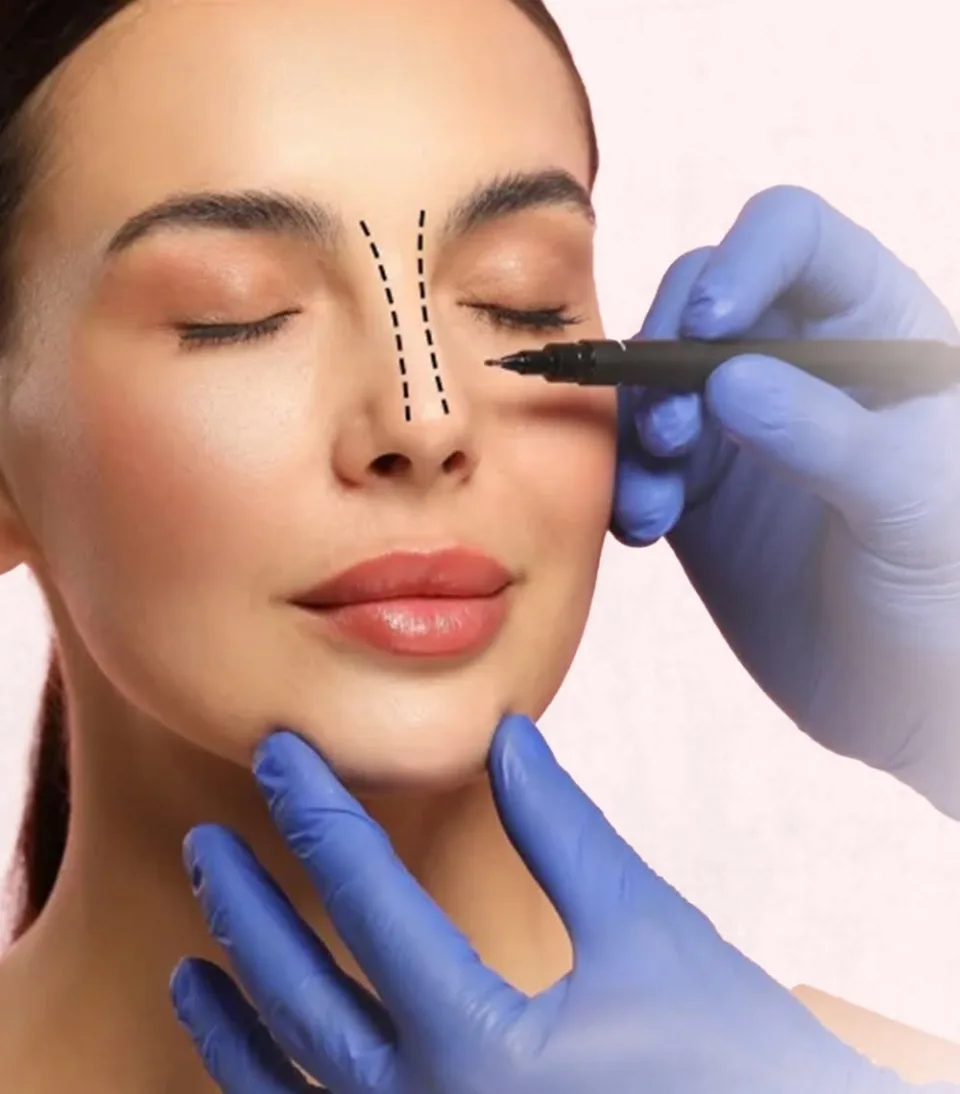
Rhinoplasty changes the shape or size of the nose — the bridge, hump, tip or nostrils — so that it suits the rest of the face. It can also correct a nose that was injured or affected by a cleft, and may be combined with surgery to improve breathing. The goal is a natural nose that fits your face, not a standard shape.
What it addresses
- A hump on the bridge, a wide or drooping tip
- Crooked nose after injury
- Cleft nose deformity
- Nasal shape that is out of balance with the face
Who may be a candidate
- Adults whose nasal growth is complete (usually late teens onwards)
- People in good general health with realistic expectations
- Non-smokers, or those willing to stop before and after surgery
Treatment options
- 01Reduction of a dorsal hump
- 02Tip refinement
- 03Correction of a crooked nose
- 04Secondary cleft rhinoplasty
- 05Augmentation with cartilage grafts
Benefits & limitations
- Better facial balance and, where needed, improved breathing
- Final shape takes up to a year to settle
- Small revisions are sometimes needed
Every patient is different. Results vary and no outcome can be guaranteed; your surgeon will discuss what is realistic for you.
Consultation & assessment
At Central Hospital, Dhanmondi, Dr. Masum takes a full history, examines the area of concern and — only with your permission — takes clinical photographs for your file. He explains which options suit you, including non-surgical ones where they are appropriate, together with the expected recovery, possible risks and the cost, so that you can decide without pressure.
Please bring previous prescriptions, investigation reports and a list of the medicines you take.
Preparing for surgery
- 1Tell the surgeon about diabetes, high blood pressure, heart or kidney disease and any allergies.
- 2Mention blood thinners, aspirin or herbal supplements — some may need to be paused only on medical advice.
- 3Stop smoking well before surgery; it slows wound healing.
- 4Follow the fasting and medicine instructions you are given for the day of surgery.
- 5Arrange for a family member to accompany you and help at home for the first days.
The procedure
The operation is done under anaesthesia through incisions inside the nose, sometimes with a small cut across the skin between the nostrils. Bone and cartilage are reshaped and a splint is applied.
Recovery & aftercare
Swelling and bruising around the eyes settle over one to two weeks; the splint is removed after about a week. Avoid knocks to the nose and strenuous exercise for several weeks.
Possible risks
- Breathing difficulty or nasal blockage
- Asymmetry or a result different from what was hoped
- Bleeding or a collection of blood under the skin (haematoma)
- Infection
- Delayed wound healing or wound breakdown
- Scarring that is more noticeable than expected
- Risks related to anaesthesia
Questions about this treatment
The aim is a nose in proportion with your face. Photographs and discussion at consultation help agree realistic goals.
Related videos
Rhinoplasty — the real facts about nose surgery
নাকের সৌন্দর্য বাড়াতে রাইনোপ্লাস্টি চিকিৎসা পদ্ধতি | Dr. Md. Mahbubur Rahman - Rhinoplasty Surgery
নাকের সৌন্দর্য বাড়াতে রাইনোপ্লাস্টি চিকিৎসা পদ্ধতি | Dr. Md. Mahbubur Rahman - Rhinoplasty Surgery
রাইনোপ্লাস্টি কি? | Dr. Md. Mahbubur Rahman - নাকের পুনর্গঠন চিকিৎসা - Rhinoplasty Surgery
Appointment
Talk to us before you decide.
Call the hotline for a serial at Central Hospital, Dhanmondi — Saturday to Thursday, 3 pm to 6 pm.